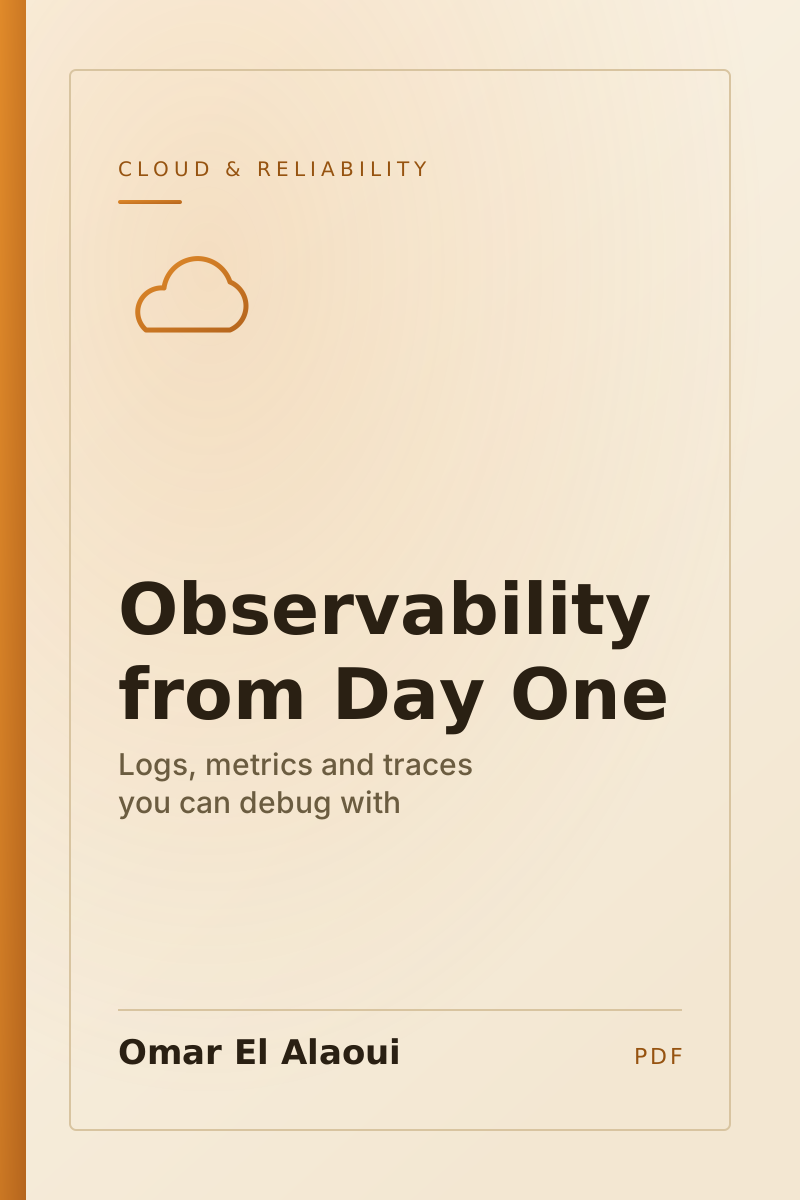
Observability from Day One
Logs, metrics and traces you can actually debug an incident with
By Omar El Alaoui
One-time purchase
€45.00
VAT included
where applicable
- Download starts the moment you pay
- Reads anywhere a PDF does
- Edition updates come free
- Checkout handled securely
About the book
What you’re getting into
When a system breaks at 3am you don't rise to the occasion — you fall to the level of your instrumentation. This book is about building that instrumentation before you need it: structured logs, metrics that track real user pain, and traces that follow a request across every service it touches. You'll learn to turn a wall of dashboards into a fast answer to the only question that matters — what's actually broken?
After you’ve read it
What you’ll be able to do
- Instrument a service so future-you can debug it
- Write structured logs that are searchable, not noise
- Choose metrics that map to user pain, not vanity
- Trace a request across service boundaries
- Build dashboards that answer one question each
- Set alerts on symptoms, backed by SLOs and error budgets
- Drive a live incident from alert to root cause
- Grow an instrumentation culture that scales with the team
Table of contents
- 01
Debugging What You Can't See
- The 3am problem
- Monitoring versus observability
- Instrumenting from the start
- 02
Logs Worth Keeping
- Structured logging
- Levels, sampling and cost
- Correlation IDs
- 03
Metrics That Map to Pain
- The RED and USE methods
- Histograms and percentiles
- Cardinality traps
- 04
Distributed Tracing
- Spans and context propagation
- Tracing across services
- Sampling strategies
- 05
Dashboards People Actually Use
- One question per panel
- Signal over decoration
- Service-level views
- 06
Alerts That Don't Cry Wolf
- Symptom-based alerting
- SLOs and error budgets
- Beating alert fatigue
- 07
Debugging a Live Incident
- From alert to root cause
- Following a request end to end
- Common failure signatures
- 08
An Observability Culture
- Instrumentation as code
- On-call that scales
- A readiness checklist
The full chapter list, exactly as it appears in your PDF.
More in Cloud & Reliability